

Handloom Weaving
Handloom weaving is a strong tradition practiced across India that is often passed down through family. Largely a household enterprise, as well as being predominantly a rural activity, handloom weaving provides employment to the largest number of people next only to agriculture.
Our Table linen and Kitchen Collection features high quality, 100%, handwoven cotton threads from disabled artisan communities. The weavers use large traditional looms to ensure a sturdy, eco-friendly, machine washable product that makes consumers and workers happy. They earn dignity and self respect for their work and help sustain one of India’s dying craft traditions.
The cotton yarns are hand dyed, wound on a bobbin and then warped according to the design onto the loom to create various patterns. Warping the loom can take up to a day by two people. The spun yarn is then used to weave the fabric on basic 2-4 shaft looms by the weavers. Each weaver is able to weave about 5-8 meters a day depending on the weave type. Spinning and dying are usually a women’s job, where as weaving is done by the male counterpart in most of the regions in India.
Our handloom products are also khadi fabrics which are made from hand spun and hand woven threads. Khadi is a slightly coarse yet comfortable cotton fabric hand spun on a hand wheel spindle or a “charkha”. During the British rule, Mahatma Gandhi inspired the country to weave their own clothing and be free from British imports. Khadi is not just a piece of cloth it is a symbol of self reliance!!
Woven fabrics are highly absorbent and easy to wash and maintain. We offer a Table Linen Collection of handloom fabrics handmade by disabled artisan weavers and their dependents from The Physically Handicapped Rehabilitation and Training Centre (PHRTC), Maharashtra and Bharat Mata Kusht Ashram (BMKA), Haryana.
Block Printing
Hand-block printing is an ancient surface embellishment technique on fabric, which finds mention in the oldest of civilizations. The technique consists of a design or pattern engraved on a wooden or metal block dipped in a tray of color pigments and then placed on the fabric surface, thus creating an impression. Indian royalty famously wore the finest block-printed fabrics with beautiful paisley and floral prints that denoted marital status and caste.
These exquisite fabrics are a trademark Indian craft tradition that traditionally are produced with natural dyes. The fabrics adorn royal robes, religious cloths, clothing and flowing skirts throughout India.

Printing with blocks requires accuracy and practice. The entire fabric is printed in the similar manner, matching the block edges every time and with equal pressure. The outline printer is usually an expert because he is the one who leads the process, followed behind a second or third printer if it is a multiple color design. Wood carving takes a wood block carver nearly 10 days to carve a large and intricate floral block.
Some of our products feature block printed and kalamkari fabric. Kalamkari refers to the Indian craft of painting Natural Dyes on cotton or silk fabric using a bamboo pen. It’s a fine craft brought over from Persian traders on the silk route.
Our Kalamkari Handbag Collection is 100% cotton and features beautiful, vegetable dyed block printed fabric from South India. The bags are sewn by the ladies of Stree Shakti in the foothills of the Himalayan Mountains with fabric made from small family traditional block printers.
Hand Embroidery
Embroidery has been an integral part of most cultures in India and holds a unique identity from region to region originating from ancient times. Elaborately embroidered items are traditionally given to a girl at the time of her marriage when the skill is then passed down to younger generations. The threads are dyed in natural vibrant colors and the embroidery is done using a variety of unique stitches. Simple running stitch of kantha or the satin and chain of Kashmiri Kashidakari depict the passion and life of the people of the state inspired by their natural surroundings.
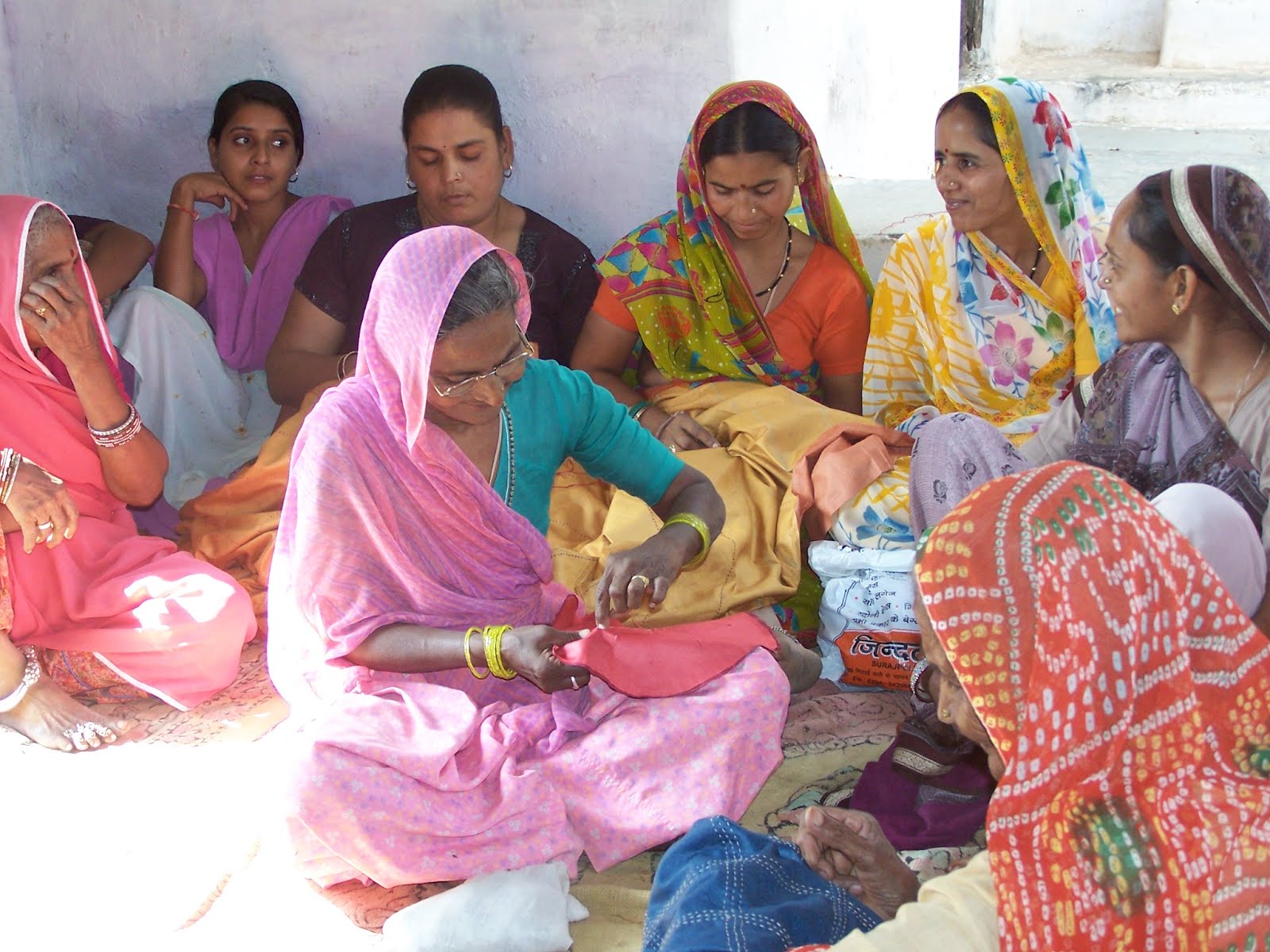
Gujarat and Rajasthan are two states famous for its folk embroidery traditions. Apart from the usual gifts of jewelry and household utensils, the bride brings to her husband’s home a wealth of richly embroidered textiles carefully worked by herself and the women of her family. Embroidery from these states is typically highlighted by the sparkle of shishas (small mirrors), otherwise known as Mirror Embroidery. This embroidery decorates clothing, torans (doorway hangings), household shrines, curtains and rumals (cloth wrappings).
We partner with a collective of more than 650 women members from villages in Rajasthan who specialize in kantha-running stitch embroidery that adorns our clothing, home décor and fashion products.
Natural Dyeing
Over the centuries, Indian craftsmen have used natural dyes made from plants, seeds, leaves, bark and fruits on mulmul (muslin), cotton, wool and silk textiles which are known all over the world today. These are non-harmful to human beings, and many of them are found in Ayurvedic medicine recipes, another ancient tradition. When conscious consumers choose naturally dyed products over those with cheaper, stronger chemical dyes, they ensure the survival of natural dyes which represent centuries of wisdom, art and craftsmanship.
Folk paintings are created with natural dyes, for example, Kalamkari, Block Prints and Madhubani Paintings. Indian natural dyed fabrics fall into three categories - yarn dyed in natural colours and woven; materials block printed with natural dyes and Kalamkari where the "Kalam" or pen is used to draw beautiful designs on the cloth.
The easy availability of chemical dyes has meant a decline in the traditional use of natural dyes. One of the chief objectives of Himalayan Weavers, our artisan partner, is to reverse this trend. All of their beautiful handspun and woven scarves and shawls are colored with natural dyes obtained from roots, bark and flowers. They use only alum as a mordant, which is eco-friendly.

The dyeing of the fibers are done in-house at room temperature, which results in low energy consumption and carbon emission. They also make a special effort to conserve water by using a dye bath for a number of dyeing sessions. The waste water is recycled and used for irrigation in their garden.
These traditional colors include: madder, tesu, indigo, pomegranate, harada, henna and lac. The dyed fibers are then blended to produce a wide variety of beautiful natural shades.


